The start of a new school year brings a return to routines—but it can also bring backpacks, lunch boxes, sports equipment, paperwork, and shoes into every corner of the house.
You do not need a large mudroom or a professionally designed storage system to keep the clutter under control. A few simple changes can make mornings easier, reduce daily frustration, and help your home feel calmer as summer winds down.
Create a Drop Zone Near the Door
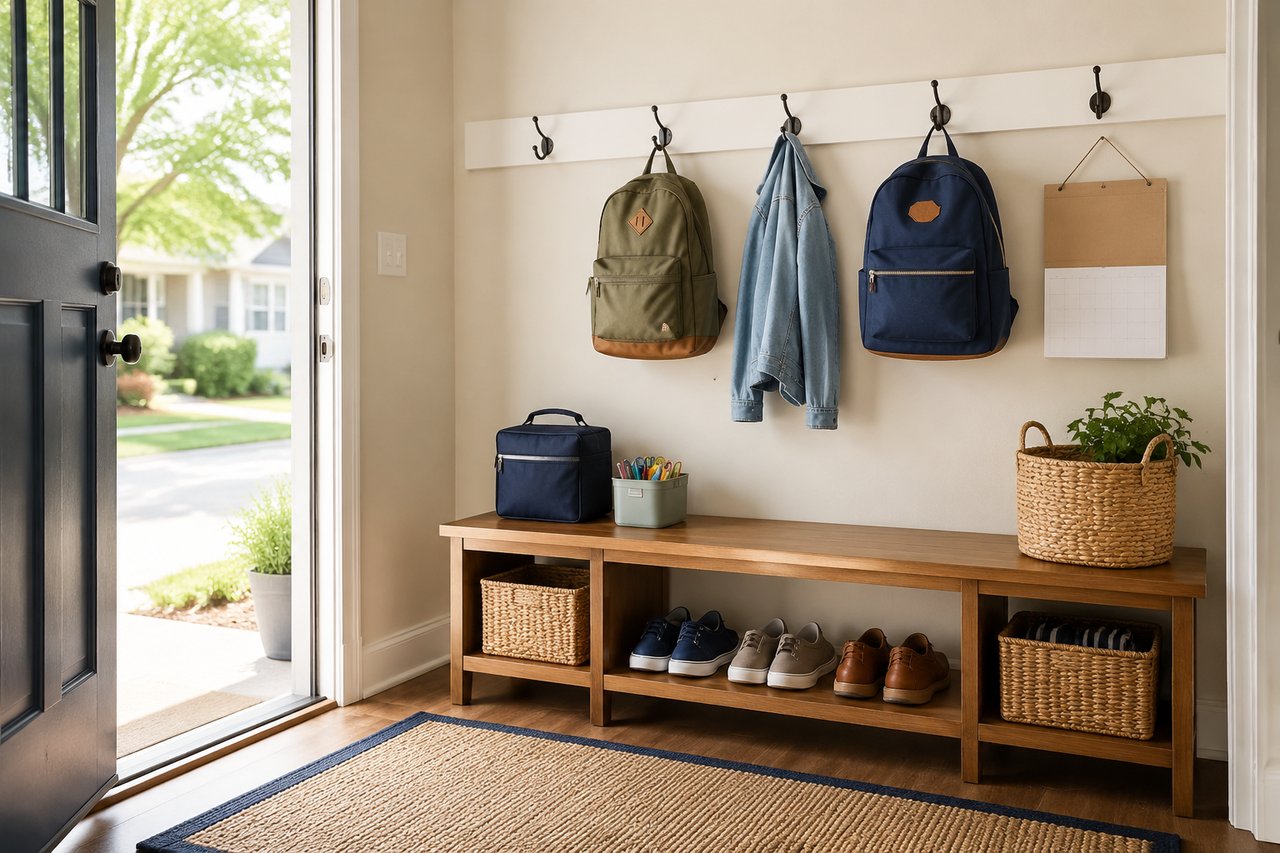
The best organizational systems work with your family’s natural habits. If backpacks and shoes always land near the door, create a designated place for them there instead of trying to force everyone to carry everything to another part of the house.
A small bench, a row of sturdy hooks, and a basket for each person can be enough. Give frequently used items—backpacks, jackets, shoes, umbrellas, and sports bags—a specific home.
If you do not have a mudroom, consider using a section of the garage, a coat closet, the back of a door, or a narrow wall in the entryway. Vertical storage can be especially helpful in a smaller space.
Set Up a Paperwork Station
School papers have a way of multiplying quickly. Create one place for permission slips, schedules, homework, and forms that require a signature.
A wall-mounted file holder, desktop organizer, or a few labeled folders can prevent important papers from disappearing into a pile on the kitchen counter. Include a recycling bin nearby so outdated notices and unnecessary papers can be handled immediately.
Try to review the paperwork at the same time each day. A simple five-minute routine can keep a manageable stack from becoming a major weekend project.
Give Lunch Supplies Their Own Space
Busy mornings are easier when everyone knows where to find lunch boxes, reusable containers, water bottles, and snacks.
Choose one cabinet or drawer for lunch supplies. Place everyday items where children can reach them when appropriate, and use small bins to group similar things together. You might also designate part of the refrigerator or pantry for grab-and-go options.
Keeping all the supplies in one area makes it easier to see what you have—and helps prevent the collection of mismatched containers and missing lids from taking over your cabinets.
Prepare an Outfit Area
Choosing clothes the night before can eliminate one source of morning stress. A hanging organizer, a few labeled hangers, or even a clear space on a dresser can hold the next day’s outfit.
This is also a good time to go through closets and drawers. Remove clothing that no longer fits, repair or replace worn items, and donate pieces that are still in good condition but no longer being used.
A closet does not need to be perfectly styled. It simply needs enough open space for the clothing that is currently in rotation.
Control Sports and Activity Gear
Cleats, tennis racquets, dance bags, musical instruments, and other activity supplies can create clutter quickly—especially when several schedules overlap.
Store items by activity rather than spreading them throughout the house. A large basket, shelf, or clearly labeled bin for each sport or activity makes it easier to grab what is needed and put it away afterward.
Keep seasonal equipment elsewhere until it is needed. There is no reason for winter gear to compete with soccer equipment for prime space in August.
Create a Homework Space That Fits Your Home
A dedicated homework room is not necessary. A quiet corner of a bedroom, a desk in a common area, or a section of the kitchen table can work well.
Keep basic supplies together in a portable caddy so they can be used and put away easily. Pencils, pens, scissors, paper, chargers, and other frequently needed items should be accessible without filling the entire work surface.
Good lighting and a comfortable chair matter more than elaborate décor. The goal is to create a space where it is easy to focus and equally easy to clean up.
Use a Family Calendar
Whether you prefer a paper calendar, dry-erase board, or digital app, keep important dates in one central place. Add school events, sports practices, appointments, and deadlines as soon as you receive them.
A weekly review can help everyone understand what is coming and what needs to be prepared. It can also prevent last-minute searches for uniforms, projects, or supplies.
Do a Short Evening Reset
One of the simplest ways to manage clutter is to spend 10 minutes putting the main living areas back in order each evening.
Return shoes and backpacks to the drop zone, clear the kitchen counter, pack lunches, charge devices, and check the next day’s schedule. The goal is not to deep-clean the house every night. It is to give the next morning a better starting point.
Start Small and Keep It Realistic
An organization system only helps if it is easy enough to maintain. Begin with the area that causes the most frustration—perhaps the entryway, kitchen counter, or bedroom floor—and solve that problem first.
This matters when you are living in your home, and it also matters when you are preparing to sell. Buyers notice open counters, organized entryways, and storage spaces that feel functional. A less cluttered home often appears larger and allows buyers to focus on the house instead of the belongings inside it.
You do not need to make the entire house perfect before the school year begins. A few practical systems, consistently used, can make your home feel more organized long after the first-day excitement has passed.
If you are thinking about selling your Pittsburgh-area home this fall, I can help you decide which decluttering and preparation projects will make the greatest difference before your home goes on the market.