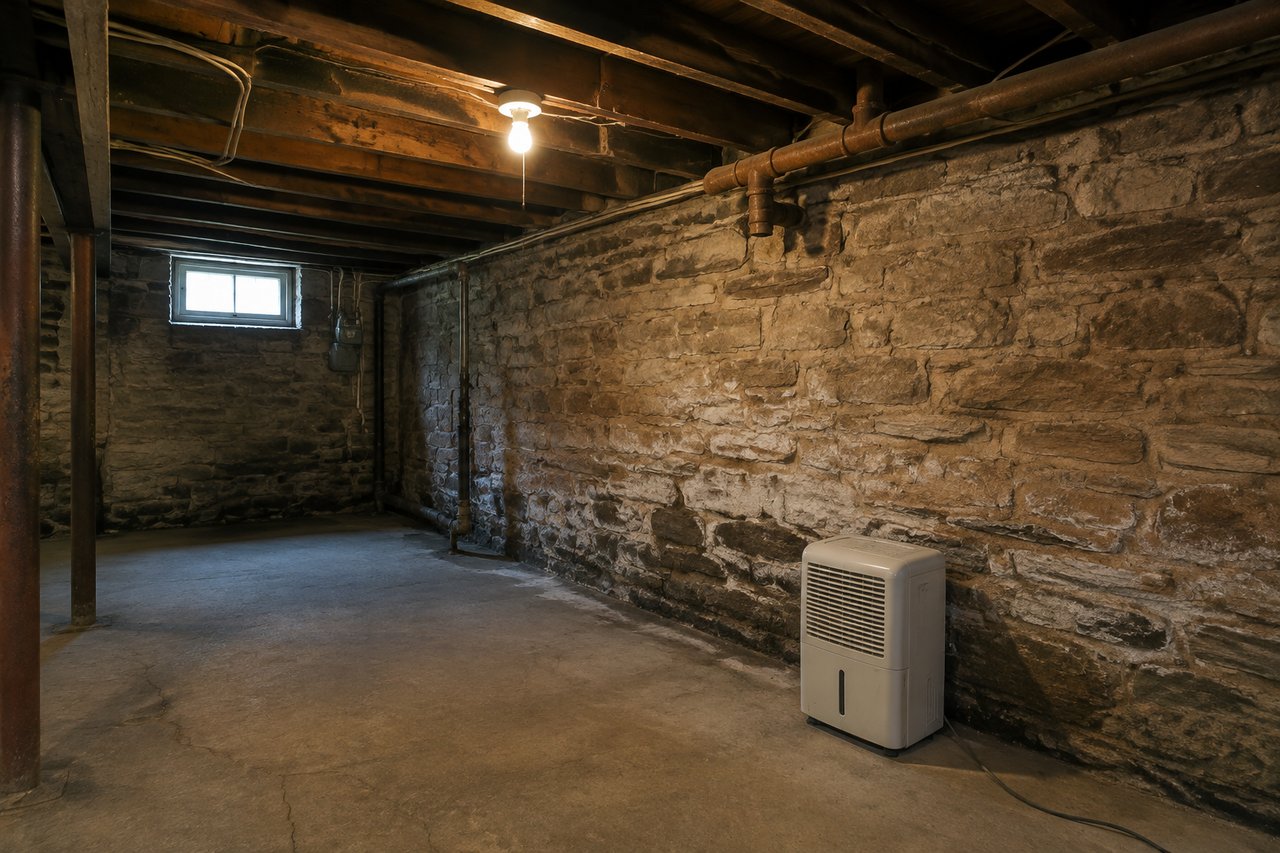
If you tour enough homes in Pittsburgh, sooner or later you will encounter a basement that feels like it belongs in a scary movie: rough stone walls, low ceilings, exposed pipes, an uneven floor, one dim light bulb, and a smell that can only be described as “old basement.”
That appearance can be unsettling, especially for buyers accustomed to newer construction. But a creepy-looking basement is not automatically a bad basement—and a freshly painted basement is not automatically a good one.
The important questions are what the foundation is made of, how water is being managed, whether the structure appears stable, and whether there are signs of an ongoing problem.
Why So Many Pittsburgh Basements Look Like This
Pittsburgh has a large inventory of homes built in the late 1800s and early 1900s. Many have foundations constructed from locally available sandstone or other stone, held together with mortar.
These foundations were built before modern poured concrete, exterior waterproofing membranes, sump systems, and perimeter drains became common. Stone and traditional mortar assemblies can absorb and release moisture, so an old foundation may feel damp or show some moisture after prolonged rain without necessarily being structurally unsound.
That does not mean buyers should accept standing water, active leaks, mold, or damaged framing. It simply means an old stone basement should be evaluated according to its construction—not judged by the standards of a brand-new poured-concrete basement.
Things That May Look Scary but Are Not Always Deal Breakers
Rough, Uneven Stone Walls
Old stone foundations were not built to look finished. The stones may vary in size, and the wall surface may be irregular. Appearance alone does not tell you whether the wall is stable.
White, Powdery Material on the Walls
This may be efflorescence—mineral salts left behind as moisture moves through masonry and evaporates. Efflorescence indicates moisture movement, so it deserves attention, but it is different from fuzzy or spreading biological growth.
A Dehumidifier Running
A dehumidifier is common in older Pittsburgh basements, particularly during humid summer weather. Its presence is not automatically suspicious. What matters is whether it is controlling normal humidity or attempting to compensate for a larger water problem.
An Uneven Concrete Floor
Many old basement floors were poured well after the house was built and were never intended to become finished living space. Some unevenness or minor cracking may be typical. Significant displacement, active water coming through cracks, or a floor that has heaved should receive closer evaluation.
Evidence of Old Repairs
Repointed mortar, a repaired crack, a sump pump, or an interior drainage system does not necessarily mean the home should be avoided. A properly completed repair can be a positive.
Ask why the work was done, who performed it, whether permits were required, and whether invoices or warranties are available.
Moisture: What Buyers Should Investigate
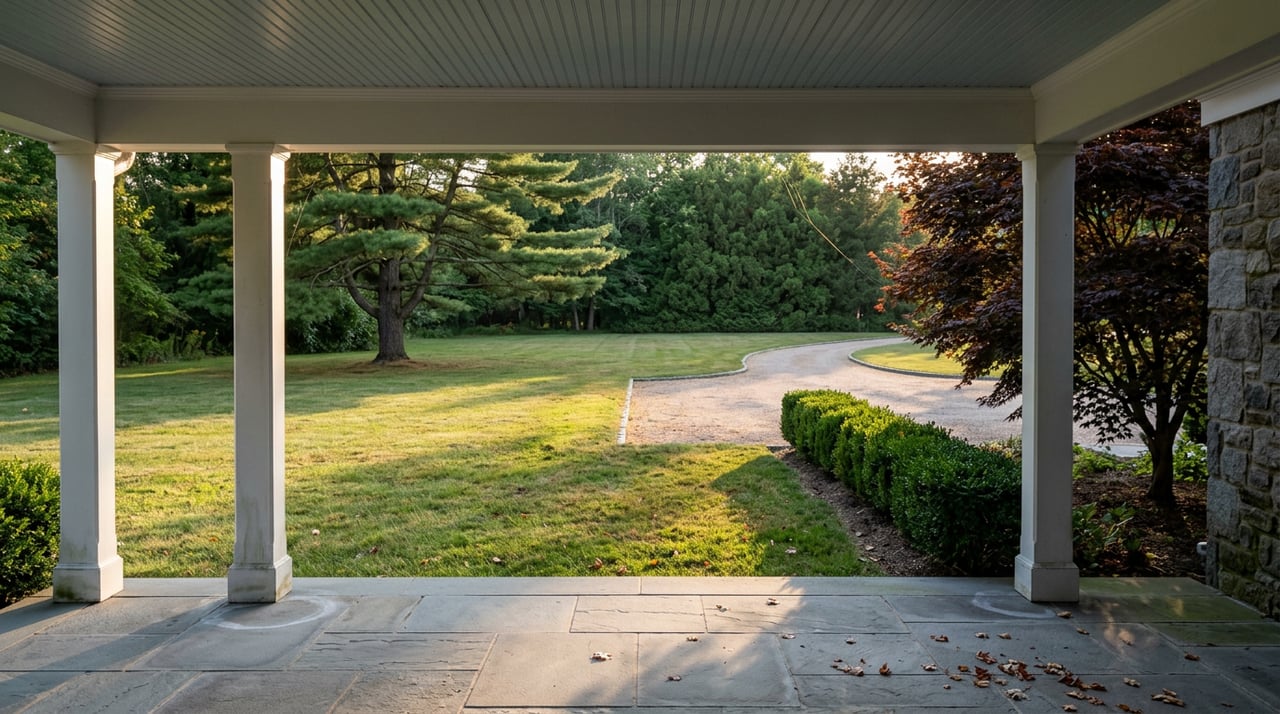
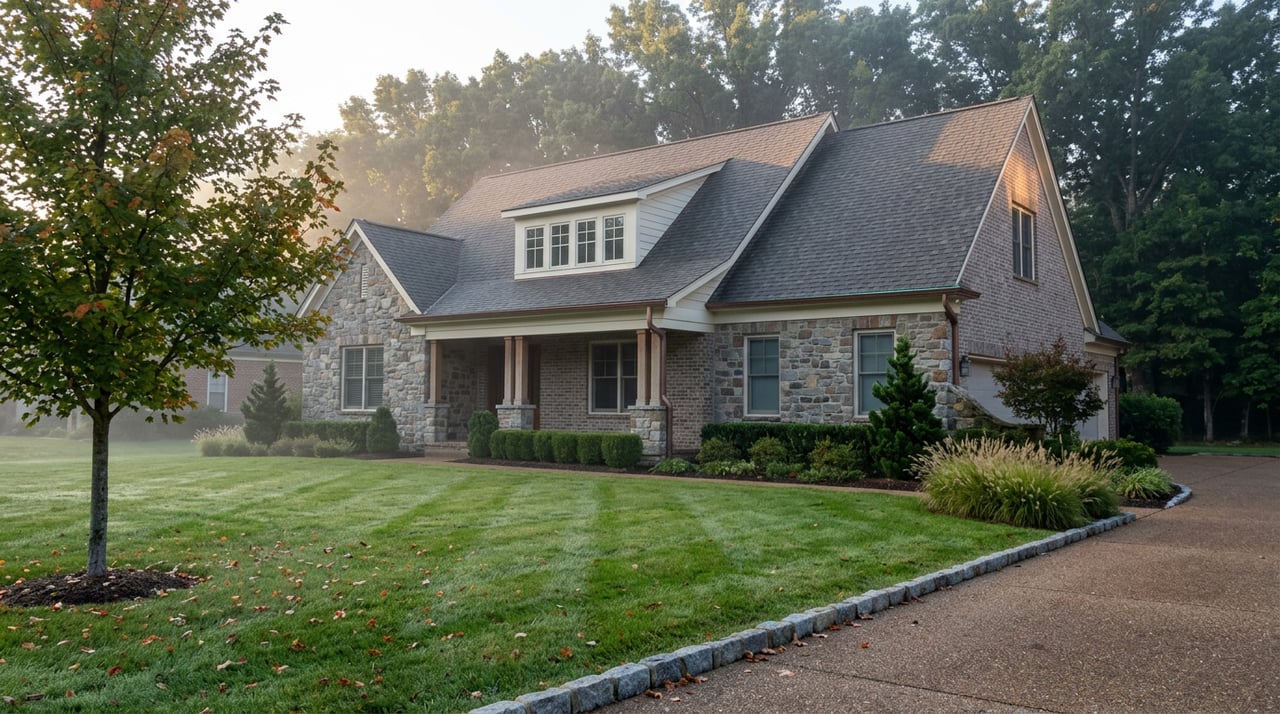
The most useful clues are often outside the house. Look at the grading, gutters, downspouts, window wells, patios, driveways, and retaining walls. Water should be directed away from the foundation rather than collecting beside it.
The EPA specifically identifies seepage, poor grading, and gutters or downspouts that direct water toward a home as common sources of basement moisture.
Inside, look for:
- Active dripping or water running down a wall
- Puddles, standing water, or a visible water line
- Wet cardboard, furniture, or stored belongings
- Dark staining or widespread suspicious growth
- Soft, rotted, or discolored wood near the foundation
- Rust concentrated around support posts, appliances, or the bottoms of metal components
- A strong musty odor that remains even when the basement appears dry
- Multiple sump pumps, hoses, fans, or freshly moved storage that may suggest a recent event
Moisture problems should be taken seriously because controlling moisture is the key to controlling mold. The EPA recommends fixing the water source and drying water-damaged materials promptly.
EPA guidance on moisture and mold
Structural Signs That Deserve More Attention
This is where I become much more cautious. A home inspector can identify concerns and may recommend further evaluation, but a structural engineer or experienced foundation professional may be needed to determine the significance of movement.
Potential red flags include:
- A wall that is visibly bowing, bulging, or leaning inward
- Large sections of missing or crumbling mortar
- Stones that have shifted or fallen out of place
- Long cracks that continue through the foundation and the structure above
- Doors and windows directly above the area that are badly out of square
- Sagging, cracked, cut, or heavily damaged floor joists
- Temporary-looking posts, stacked blocks, or improvised structural supports
- Evidence that water is repeatedly washing mortar or soil into the basement
- Major movement around an addition or where two foundation types meet
A single crack or old repair does not provide the entire answer. The pattern, location, width, and evidence of continuing movement all matter.
Be Careful With Fresh Paint and Wall Coverings
A dark, unfinished basement may reveal more than a bright white one. Fresh masonry paint, paneling, insulation, or newly framed walls can make a basement look cleaner while hiding stains, cracks, deteriorated mortar, or previous water entry.
That does not mean every painted basement is concealing something. It does mean buyers should ask when the work was completed and why. During an inspection, the visible portions of the foundation, sill plate, joists, drainage system, and mechanical equipment still need careful attention.
Also be cautious about applying modern waterproof coatings or incompatible mortar to an old stone foundation without professional guidance. A repair that traps moisture or uses material much harder than the original mortar can create new problems instead of solving the old ones.
Do Not Forget the Other Basement Issues
Water and structure are not the only concerns in an old Pittsburgh basement. Buyers should also pay attention to:
- The electrical panel, exposed wiring, and evidence of outdated electrical systems
- The age and condition of the furnace and water heater
- Old supply or drain lines
- The main sewer line and whether a sewer-camera inspection is appropriate
- Asbestos-containing materials or other environmental concerns that may require professional testing
- Pest activity and damaged wood
- Adequate combustion air and proper venting for fuel-burning equipment
- Radon
Radon is especially important in Pennsylvania. It is invisible and odorless, so you cannot determine its presence by looking at—or smelling—the basement. The Pennsylvania Department of Environmental Protection recommends testing because that is the only way to know the radon level in an individual home.
Pennsylvania DEP radon information
When I Would Consider Walking Away
I become much more concerned when several major issues appear together: significant foundation movement, uncontrolled water entry, damaged framing, widespread mold-like growth, failing mechanical systems, and no clear documentation of repairs.
That combination can turn an affordable older home into an expensive and unpredictable project. A buyer may still choose to proceed after obtaining specialized evaluations and realistic estimates, but it should be a fully informed decision—not a hopeful guess.
I would also be cautious when access is blocked, important areas cannot be inspected, the seller cannot explain obvious recent work, or there is pressure to waive inspections despite visible concerns.
The Bottom Line
An old Pittsburgh basement does not need to be pretty. It needs to be structurally stable, reasonably maintained, and able to manage water in a way that protects the house.
A little dampness after heavy rain may be part of owning an old stone foundation. Standing water, active deterioration, damaged framing, or major movement is a different matter.
The goal is not to find a 120-year-old basement that looks brand-new. It is to understand what you are seeing, investigate the right concerns, and know the difference between old-house character and an expensive warning sign.
If you are buying an older home in Pittsburgh, I can help you look beyond the cobwebs, ask better questions, and bring in the right inspectors and specialists before you make a final decision.