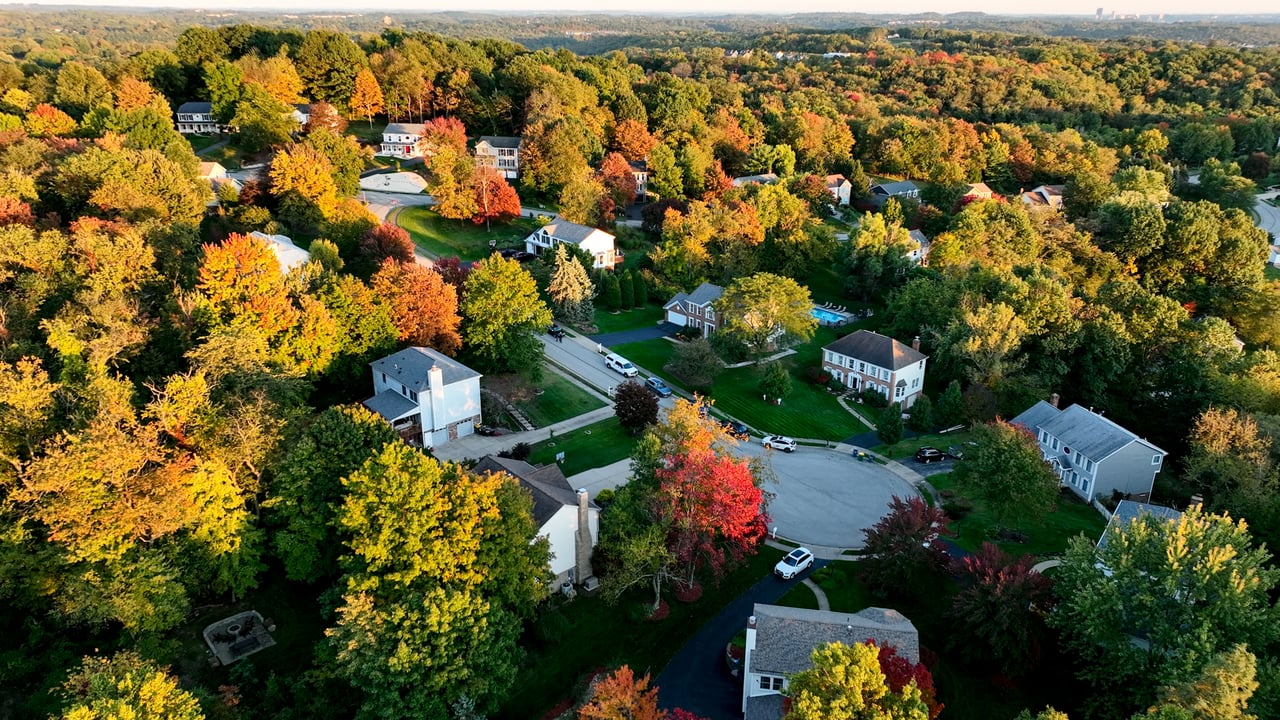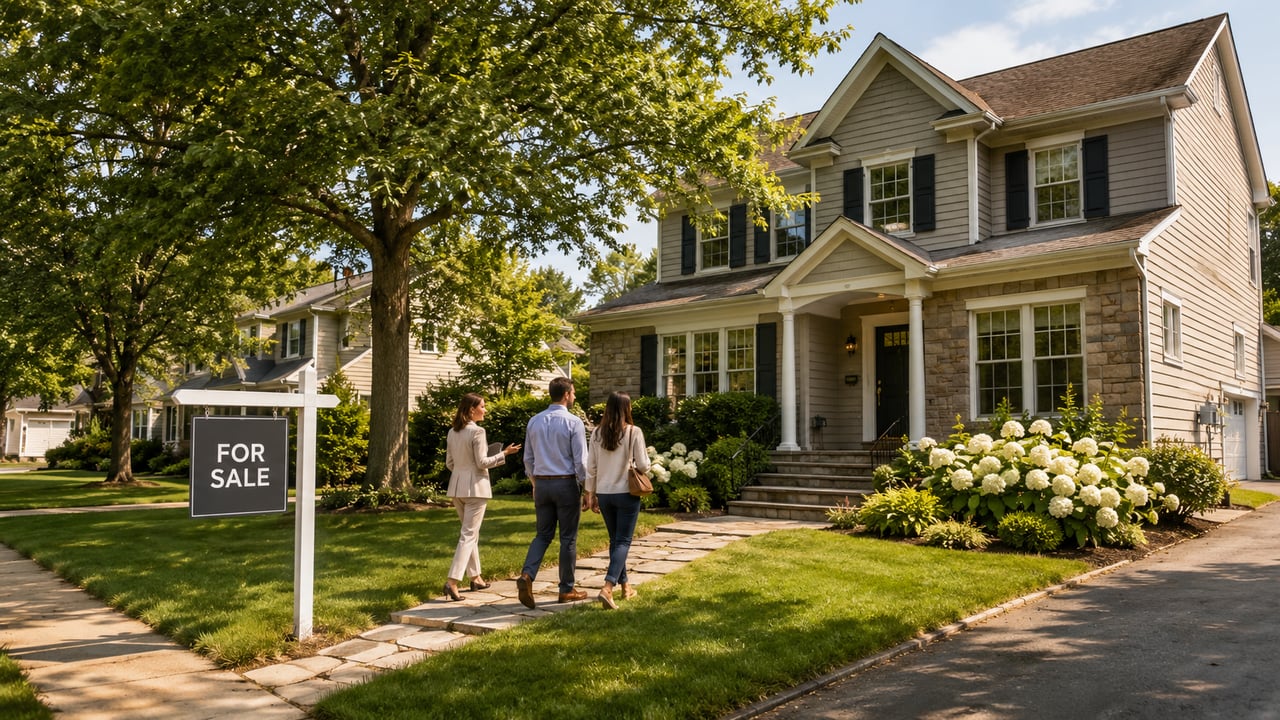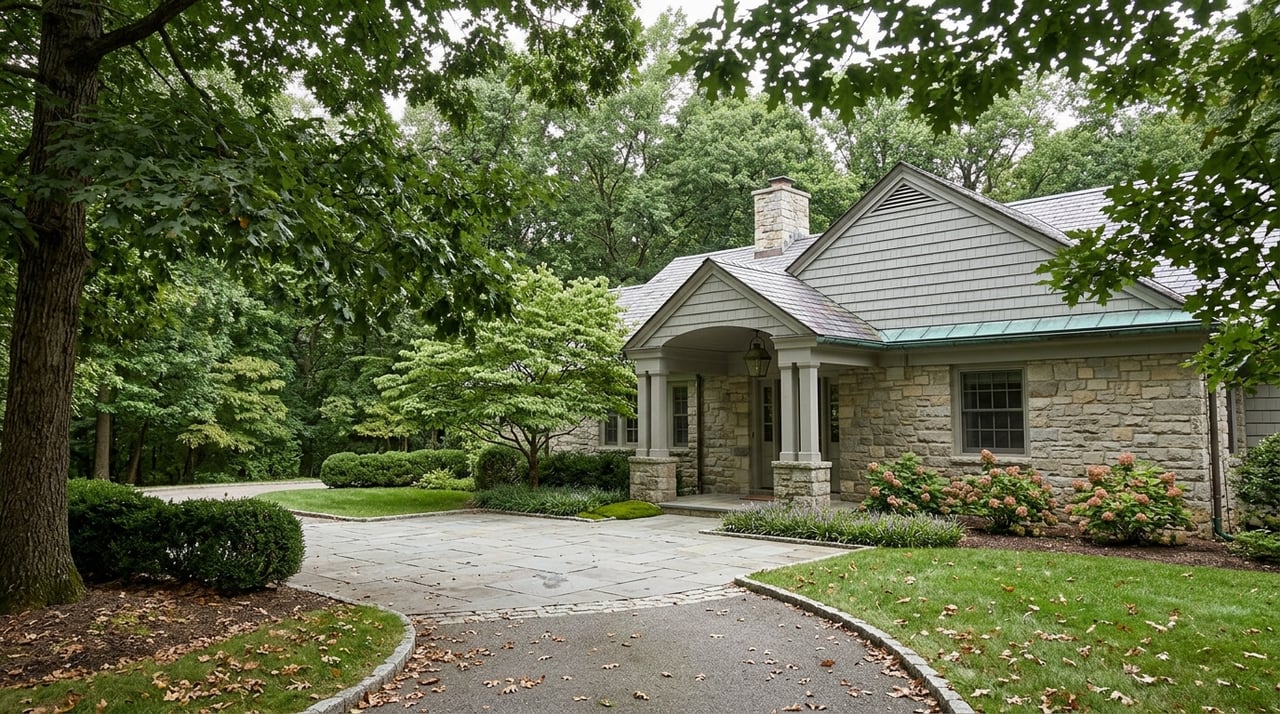
A few years ago, a group of Allegheny County homebuyers sued the county over an obscure calculation buried in the property tax code. The properties named in that case sat in Wilkinsburg, McKeesport, the city of Pittsburgh, Forest Hills, and Franklin Park. In every case, the pattern was the same: buy a home, then watch a school district or municipality file an appeal to push the assessed value up to match what was just paid for it.
If you are shopping for a home in Franklin Park right now, that pattern is still active, and the window to understand it before you write an offer is short. Franklin Park sits in the North Allegheny School District, where the school millage alone runs 19.74 mills for the 2025-2026 year, typically the largest single line on a homeowner's tax bill. And as of this writing, Allegheny County's annual appeal window for 2027 tax bills is open only through September 1, 2026, which means the mechanics behind this practice are getting fresh attention right now, not in some future filing season.
What Actually Happens After You Sign
Allegheny County has not conducted a countywide reassessment since 2012. Every property in the county is still supposed to be taxed based on what it was worth back then, adjusted by a multiplier called the Common Level Ratio, or CLR, that converts today's market value back into a 2012-equivalent number.
That system creates an obvious gap. A house that sold quietly in 2013 for $200,000 might carry a 2012 assessment nowhere near what it would sell for in 2026. A house that just sold this year for $650,000 gives a school district something the 2013 sale never did: a fresh, documented number to work with. Districts across the county have used exactly that. Attorneys who defend homeowners against these appeals call it, informally, the "welcome to the neighborhood" tax, because it tends to land on the newest owner on the block rather than the neighbor who has lived there since 2012.
The Screening Rule Behind the Letters
Tax attorneys who handle these cases regularly describe a screening pattern districts use to decide which sales are worth appealing: if the current assessed value comes in under roughly 80 percent of the recent sale price, the property becomes a likely candidate. A home assessed at $300,000 that sells for $650,000 sits at about 46 percent of sale price, well under that line. A home assessed at $500,000 that sells for $600,000 sits at about 83 percent, above it.
That ratio, not the sale price by itself, is the trigger. Two buyers can pay similar amounts for similar homes and land on opposite sides of the screen depending on how far out of date each home's 2012 assessment happened to be.
A Real Number, From Somewhere Else in the County
The dollar swing this produces is not theoretical. A Verona buyer named Aaron DeLeo bought his home in October 2020 expecting a manageable monthly payment. Not long after moving in, the Penn Hills School District argued his home should be assessed at $126,000, a 64 percent increase over its prior value.
"The value of my house is more than when the last person lived here. I get that part of it."
His monthly payment jumped by $400, a 44 percent increase, once the appeal went through. Franklin Park sits in a different school district than Verona, but the underlying county law that produced DeLeo's letter is the same law that applies to any recent sale here.
Running the Math on a North Allegheny Purchase
Here is the arithmetic, using round numbers and the 49.3 percent CLR set for 2027 tax bills, the ratio that applies to appeals filed in the window open right now. Say a Franklin Park home carries a 2012-era assessed value of $220,000 and sells this year for $700,000. That is a 31 percent ratio, well inside the range that tends to draw attention.
If North Allegheny elects to argue fair market value, it would apply the CLR to the sale price: $700,000 times 0.493 comes out to roughly $345,100, a proposed new assessed value. That is a jump of about $125,100 over the old number. Apply just the school millage of 19.74 mills to that increase and the school portion of the tax bill alone rises by around $2,470 a year. County and municipal millage would stack on top of that figure, since three separate taxing bodies draw from the same assessed value.
That is a meaningful number to be caught by surprise with in year one of ownership, and it is worth running before you sign a purchase agreement, not after.
Why the Shrinking Ratio Cuts Both Ways
Here is the part that surprises most buyers: the CLR has been falling fast, and that sounds like good news. It was 81.1 percent before a 2022 lawsuit forced a correction, then 63.53 percent, then 52.7 percent for 2025, then 50.14 percent for 2026, with 49.3 percent set for 2027.
| Tax Year | Common Level Ratio | What Changed |
|---|---|---|
| 2022 (original) | 81.1% | Ratio later found to overstate assessed values |
| 2022-2023 (corrected) | 63.53% | Set after a successful lawsuit against the county |
| 2025 | 52.7% | Continued downward trend |
| 2026 | 50.14% | Current confirmed ratio |
| 2027 | 49.3% | Set for the appeal window closing this September |
A lower ratio means the same $700,000 sale produces a smaller assessment jump today than it would have produced in 2021. That should mean smaller payoffs for districts filing these appeals, and in theory, less incentive to file them.
Except the volume has not slowed to match. According to figures compiled by the Allegheny Institute for Public Policy, forty school districts across the county filed 2,761 appeals for the 2026 tax year alone, out of nearly 6,000 total appeals filed. Between 2015 and 2021, school districts had already tripled the number of assessment appeals they filed on homes, according to reporting by PublicSource, and nothing in the current data suggests that pace has reversed even as the per-appeal payoff has shrunk.
The practical read for a buyer: the size of the eventual tax hike may be smaller than it would have been a few years ago, but the odds of getting a letter at all have not dropped with it. What matters most is whether your purchase price crosses that assessment ratio line, not how large the resulting increase turns out to be.
The Wildcard Still on the Table
Litigation and public pressure around Allegheny County's frozen 2012 values have not gone away. Policy researchers and tax attorneys who track the county describe a countywide reassessment as likely within the next two to three years, whether it comes through a court order or legislative action. If that happens, every property in the county gets a new number, appealed or not. A homeowner who successfully defends an appeal this year could still see a different assessed value once a full reassessment lands. That does not make the current math irrelevant. It just means today's numbers are a bridge to whatever comes next, not a permanent fixture.
Before You Write an Offer on a Franklin Park Home
- Pull the current assessed value for the specific parcel from Allegheny County's Real Estate website before you set your offer number.
- Calculate the ratio between that assessed value and your planned offer. A ratio under roughly 80 percent has historically been the range districts screen for.
- Use the county controller's property tax estimate worksheet, which applies the current CLR, to model a realistic post-appeal scenario rather than guessing.
- Ask your agent to combine school, county, and municipal millage into one estimate, since the school line is usually the largest but not the only one that moves.
- Know that if a letter does arrive, Pennsylvania law generally requires paying the current bill by its due date while an appeal is pending. In McCandless, also part of North Allegheny, the municipal tax office states plainly that once a payment deadline passes, the higher amount is owed even if the appeal is later won.
- If appealed, remember the burden of proof sits with the school district, not with you. A deed by itself is not considered sufficient evidence in a hearing. For anything beyond general awareness, a tax attorney or the county assessment office can walk through your specific parcel.
A Short FAQ
Does this only apply to homes that sell above asking price? No. What matters is the gap between the sale price and the current assessed value, not the list price or whether there was a bidding war.
Can anything be done at the closing table to prevent this? Not directly. The appeal, if it comes, arrives months after closing. What buyers can control is budgeting for the possibility in advance and knowing the process if a letter shows up.
Will a countywide reassessment make this moot? Possibly, but not immediately. Most people who track Allegheny County's assessment system describe a reassessment as probable within a few years, not guaranteed on any set date, and it would reset values for every property, not just recently sold ones.
Buying in Franklin Park still means buying into strong schools, established streets, and a North Hills location that has held its value for good reason. Understanding this one mechanism just means fewer surprises in year two. If you are getting ready to write an offer here, or anywhere in the North Hills, Robin Taylor Homes can help you run the assessment math on a specific property before you commit to a number, and walk through what a realistic first-year tax bill looks like once the district has had a chance to take a look.