If you’re buying a home in Pennsylvania, especially in Western Pennsylvania, you may notice small round metal plates along the exterior foundation walls.
Those are likely wall anchors.
For many buyers, they can look intimidating at first. But in this region, they’re actually quite common — and often a sign that a foundation issue has already been addressed.
Let’s break it down.
What Are Wall Anchors?
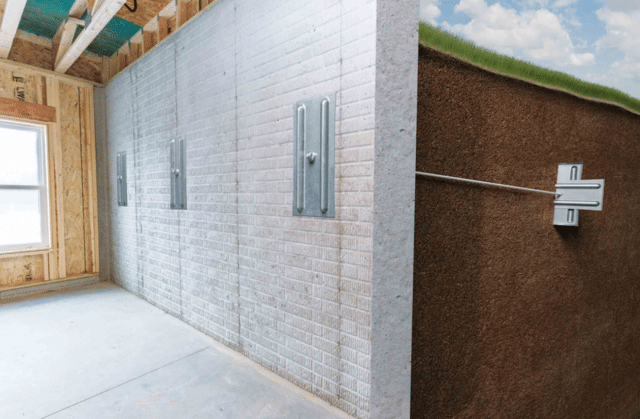
Wall anchors (sometimes called tie-back anchors) are a structural reinforcement system used to stabilize bowed or shifting foundation walls.
They work by:
-
Installing steel rods through the foundation wall
-
Connecting those rods to anchors buried in stable soil outside
-
Tightening the system to gradually straighten and stabilize the wall
On the inside of the basement, you’ll typically see metal plates attached to the foundation wall.
On the outside, you may see round steel plates against the exterior wall.
Why Are Wall Anchors Common in Western Pennsylvania?
Western Pennsylvania has several conditions that contribute to foundation movement:
-
Expansive clay soils
-
Freeze-thaw cycles
-
Older housing stock
-
Hillsides and sloped lots
-
Heavy rainfall in certain seasons
Homes built decades ago often weren’t constructed with modern drainage or reinforcement standards.
Over time, hydrostatic pressure from saturated soil can push against foundation walls, causing them to bow or crack.
Wall anchors are a long-term structural solution to counteract that pressure.
Should Homebuyers Be Worried?
Not necessarily.
In fact, many times wall anchors are a positive sign.
They often indicate:
✔ The issue was identified
✔ A professional repair was installed
✔ The wall has been stabilized
In some cases, a home with properly installed wall anchors can be more structurally secure than a home with early signs of bowing that hasn’t yet been addressed.
What Buyers Should Look For
If a home has wall anchors, buyers should:
-
Ask for documentation of the installation
-
Confirm the work was done by a reputable foundation contractor
-
Verify if there is a transferable warranty
-
Have a home inspector evaluate the wall condition
The key question isn’t “Are there anchors?”
It’s “Is the wall stable now?”
When Should You Be Concerned?
Buyers may want further evaluation if they see:
-
Significant ongoing wall movement
-
Horizontal cracking that appears active
-
Moisture intrusion
-
No documentation of repair
A structural engineer can provide additional peace of mind if needed.
The Bigger Picture
In Western Pennsylvania, foundation movement is not unusual — especially in older homes.
Wall anchors are one of several common repair methods, along with:
-
Carbon fiber straps
-
Steel I-beams
-
Improved exterior drainage systems
They are not automatically a deal breaker.
Like many things in real estate, context matters.
Final Thoughts
Seeing wall anchors on a home can feel alarming if you don’t know what they are. But in Western Pennsylvania, they’re often simply part of responsible home maintenance.
The presence of wall anchors doesn’t automatically mean a home is unstable — and in many cases, it means the issue has already been professionally addressed.
If you’re buying and have questions about foundation repairs, it’s always worth getting expert guidance. Knowledge reduces anxiety — and helps you make confident decisions.