If you’re buying or selling a home in Pennsylvania, especially in Western Pennsylvania, you may hear the term “dye test” once you go under contract.
For many homeowners, it’s unfamiliar — but in much of the region, it’s a required step before closing.
Here’s what it is and why it matters.
What Is a Dye Test?
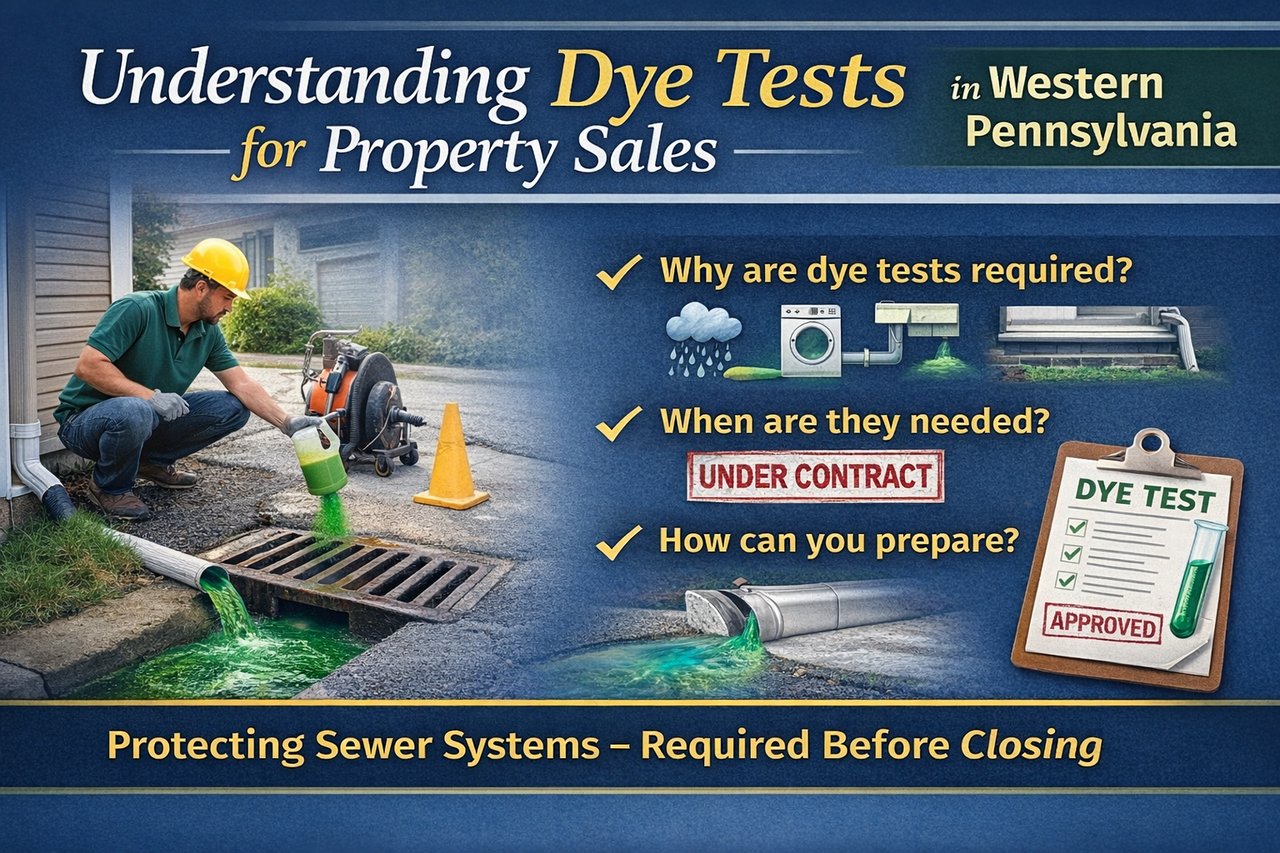
A dye test is an inspection that checks to make sure stormwater is not flowing into the sanitary sewer system.
During the test:
-
A non-toxic colored dye is introduced into areas where stormwater drains
-
This may include downspouts, driveway drains, or yard drains
-
Inspectors then check the sanitary sewer lateral to see if dyed water appears
If dyed water shows up in the sanitary sewer line, it means stormwater is improperly connected — and that connection must be corrected.
Why Is This Important?
Sanitary sewer systems are designed to handle wastewater from:
-
Toilets
-
Sinks
-
Showers
-
Washing machines
They are not designed to handle stormwater from:
-
Roof downspouts
-
Sump pumps
-
Surface drains
When stormwater enters the sanitary system, it can overwhelm treatment facilities, cause sewer backups, and contribute to sewage overflows.
Because of this, many municipalities require dye testing as part of the property transfer process.
When Is the Dye Test Scheduled?
In most Western Pennsylvania communities, the dye test is scheduled immediately after the property goes under contract.
It is part of the closing requirements and must typically be completed before settlement.
Scheduling promptly is important because:
-
Municipal inspectors may have limited availability
-
Repairs (if needed) take time
-
Closing cannot occur without compliance
This is why experienced agents arrange the dye test early in the transaction timeline.
Who Performs the Dye Test?
This varies by municipality.
Some communities allow:
✔ A licensed plumber to conduct the test
✔ The plumber to submit certification paperwork
Other municipalities require:
✔ A municipal inspector to perform the test
✔ Scheduling directly through the borough or township
Requirements are hyper-local, which is why verifying the rules early in the contract process is essential.
What Happens If the Property Fails?
If stormwater is found entering the sanitary sewer, corrective work is required before closing.
Common fixes include:
-
Disconnecting downspouts
-
Redirecting sump pump discharge
-
Installing proper exterior drainage
-
Capping illegal connections
Some corrections are minor. Others can be more involved. Either way, the issue must be resolved before settlement.
Why This Matters for Buyers and Sellers
For sellers:
-
It’s a mandatory step in many municipalities
-
It can affect closing timelines
-
Addressing issues quickly keeps the transaction on track
For buyers:
-
It protects you from inheriting improper sewer connections
-
It ensures the property meets municipal standards
Final Thoughts
A dye test may seem like a small part of the transaction, but in Western Pennsylvania, it’s an important compliance requirement.
Understanding when it happens (after going under contract), who performs it, and what it checks helps everyone move through closing with fewer surprises.
If you’re preparing to buy or sell and aren’t sure whether your municipality requires dye testing, it’s worth confirming early in the process.