Most sellers in Allison Park spend their prep budget on paint, landscaping, and a pre-listing tune-up. Then a plumber shows up two weeks before closing, pours dye into the downspouts, and the closing calendar quietly changes. The dye test is not a home-inspection quirk and it is not negotiable. In Hampton Township, it is a municipal gate the seller has to walk through before the deed can transfer, and the sooner you treat it that way, the smoother the last three weeks of your sale become.
Here is the version of the story that catches first-time Hampton sellers off guard.
What the Township Is Actually Testing For
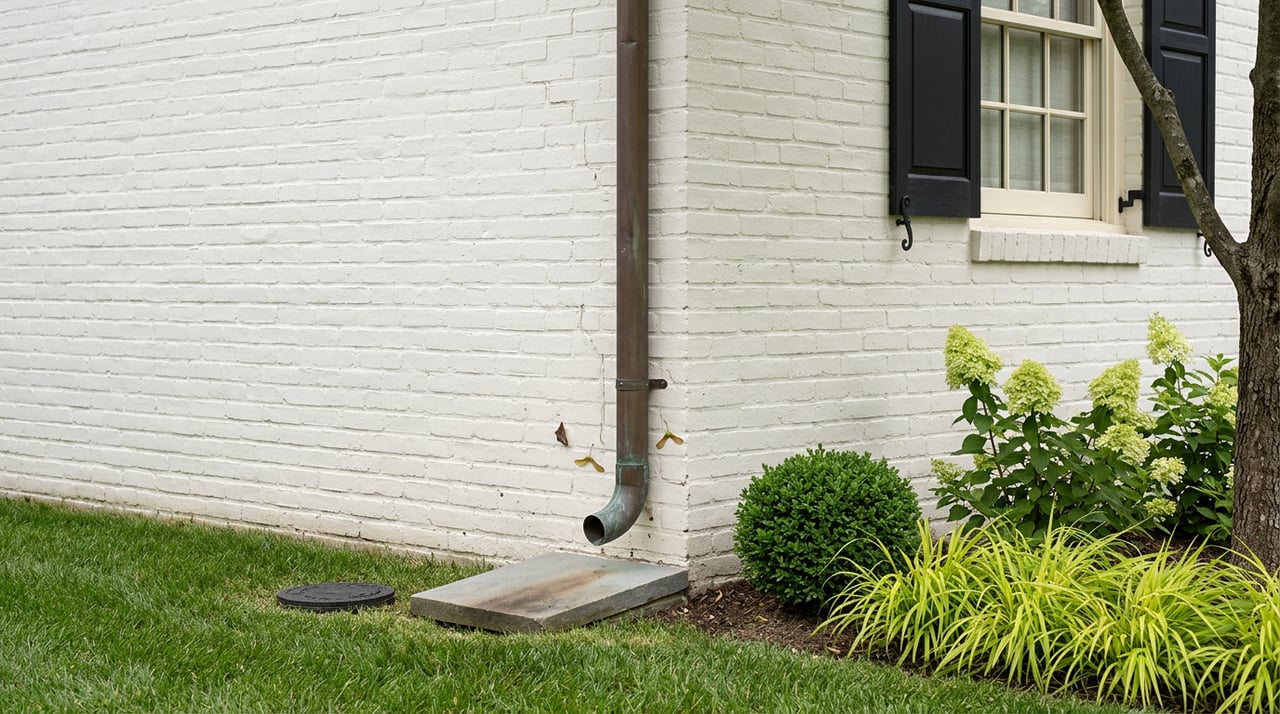
The dye test is a stormwater compliance test, not a plumbing inspection in the way a buyer's inspector runs one. A licensed plumber introduces dye into the home's collection system to verify that the downspouts and rainleaders on your home are not connected to the sanitary sewer system and to confirm that all internal sewer devices are properly connected. If the dye shows up in the sanitary line when it should be in the storm line, that is an illicit connection, and the township will not certify the property for transfer until it is corrected.
The legal backbone is Township of Hampton Ordinance #648 (adopted January 26, 2005), and the operative rule for sellers is short: there is no exemption clause; all property sales or transfers that involve a change in the name on the property deed must be tested. Estate transfers, divorce transfers, trust transfers, and quitclaim conveyances all trigger it. If the deed name changes, the dye test happens.
The Process, in the Order It Actually Happens
The sequence matters because two of the steps are township-controlled, not plumber-controlled, and they set the outside edge of your timeline.
- The seller pulls a plumber off the Hampton Township Storm Water Compliance Approved Testing Agency List. You can only use a plumber on that list.
- The seller files the Application for Storm Water Compliance Testing with the township, along with a forty-dollar ($40) administrative fee.
- Within 10 days, the Environmental Services Department will issue a Storm Water Compliance Test Packet that will need to be picked up by either the applicant or the approved testing agency at the Township Municipal Building.
- The approved plumber performs the test using the township's gold form.
- The completed report goes back to the township at least seven days before it is needed.
- If there are no violations, a Storm Water Compliance Certificate will be issued and forwarded to the Township Tax Office. If violations are noted on the Test Report, all violations must be corrected before a compliance certificate will be issued.
Add the ten-day packet window and the seven-day report return window together and you are already at roughly three weeks of municipal calendar time, before a single repair. That is the number to plan around.
What It Costs, and Where the Cost Gets Larger
The line-item fees are modest. What turns a $349 procedure into a five-figure surprise is a failed test.
| Item | Cost | Payable to |
|---|---|---|
| Township administrative fee | $40 | Township of Hampton |
| Plumber testing fee, base | $309 for 5 inlets | Approved plumber |
| Each additional inlet | $30 | Approved plumber |
| Certificate re-issue if expired | New application required | Township of Hampton |
Base figures reflect the 2026 approved-plumber schedule published by the township. The cost that catches sellers is not on this list. If dye lands in the sanitary sewer when it should land in the storm sewer, the seller either fixes it before closing or negotiates the fix into the deal. Under the ordinance, the applicant may provide a signed written acknowledgement from the purchaser agreeing to correct any violations at the purchaser's sole expense, but primary liability shall run with the land and no such agreement shall affect the Township's enforcement powers or excuse the current owner from performance. Translation: the buyer can take the problem on paper, but the township still sees the seller as responsible until the certificate is in hand.
The Twelve-Month Trap
This is the detail even experienced sellers miss. Per the ordinance, a stormwater compliance certificate shall be required for every property transfer within the Township of Hampton, and the certification shall expire 12 months from the date of issuance. If the property sale does not occur within this twelve-month period following the issuance of the stormwater compliance certificate, a new certificate shall be required.
If you tested last spring, listed, went under contract, watched the buyer's financing collapse, relisted, and are now closing thirteen months later, you are testing again. Sellers who chose to dye-test proactively when they first thought about listing sometimes find themselves paying for a second round because life delayed the sale. The right move is to time the application to the listing launch, not the "we might sell someday" conversation.
The Backflow Preventer Sitting Next to the Dye Test
Hampton sellers who assume the dye test is the only pre-close municipal item routinely get blindsided by a second one that runs in parallel. It is administered by Hampton Shaler Water Authority, not the township. From the neighboring Shaler Township guide, which mirrors the process on the Hampton side of the authority's service area: at least two weeks prior to closing, the seller shall contact Hampton Shaler Water Authority (412-486-4867) to schedule one of their servicemen to visit the premises and verify if the premises has an approved backflow preventer (dual check valve and thermal expansion tank). If the premise does not have one, you will be immediately notified and informed to contact a registered master plumber for installation. The Allegheny County Plumbing Department requires an expansion tank be installed with the backflow preventer as well.
Older Hampton homes, especially those that have not had a water heater replaced in the last decade, often lack the expansion tank. That is a licensed-plumber install, not a weekend project, and it needs to happen before the water authority will sign off.
The Approved Plumber Question
You cannot shop this on price alone. The 2026 approved testing agency list published by the township includes DiNucci Plumbing Inc., East End Plumbing & Mechanical, Inc., Gary M. Larkin Plumbing, M. Kirsch Plumbing, R.A. Samarin Plumbing Inc., Sante Berarducci, Inc. If a plumber is not on that list, the test will not be accepted, no matter how well the work is done. Most approved plumbers will not book the actual test appointment until you have the paperwork packet in hand from the township, which is why the ten-day packet window can quietly become the critical path.
Call two of them when you decide to list. Ask about current lead times and whether they can pre-inspect visually before formally testing. A pre-inspection lets a seller identify and fix a suspect downspout tie-in before the formal test is on the record, which is a cleaner path than testing, failing, correcting, and retesting.
Where This Fits in a Listing Timeline
Sellers who treat the dye test as a listing-launch task, not a closing task, typically avoid the two failure modes that cost real money: rushing repairs under a signed contract, and re-testing after a twelve-month lapse. A defensible sequence for a Hampton home:
- Week you decide to list: call two approved plumbers, submit the $40 application, schedule the backflow preventer verification with Hampton Shaler Water Authority.
- Two to three weeks later: test performed, report returned, certificate issued, any repairs identified with time to bid them out rather than accept the first available quote.
- Closing: certificate in hand, no municipal contingency dragging the settlement date.
The dye test can add friction to a Hampton sale, but only when it gets discovered late. Handled early, it becomes a paragraph in the disclosure packet and a talking point that helps a well-prepared listing outperform the one next door that is still scrambling for a plumber the week of closing.
A Short FAQ
Does the dye test transfer to a new buyer if my sale falls through? The certificate is tied to the property, not the transaction, but the twelve-month clock keeps running. If the next contract closes inside that window, you are fine. If not, you re-apply.
Can the buyer pay for repairs found in the test? By written acknowledgement, yes, but the township still holds the seller as the responsible party until the certificate issues. Most sellers find it cleaner to complete the work themselves and hand over a clean file.
Is the dye test the same as a sewer line camera scope? No. The dye test checks for illicit connections between storm and sanitary lines. A camera scope checks the condition of the lateral itself. Buyers often ask for both. They answer different questions.
Do I need this if I am transferring the home into a trust or to a family member? Yes. Any deed-name change triggers the ordinance. There is no exemption.
If you are thinking about listing a home in Hampton Township this year and want a preparation calendar that folds the dye test, the backflow preventer verification, and the marketing launch into one coordinated timeline, Robin Taylor Homes can walk you through it before the first plumber picks up the phone. Schedule a free consultation, and we will build the schedule around your closing goal, not the other way around.