For years, sellers didn’t worry too much about the exact age of their roof as long as it wasn’t actively leaking.
That’s no longer the case.
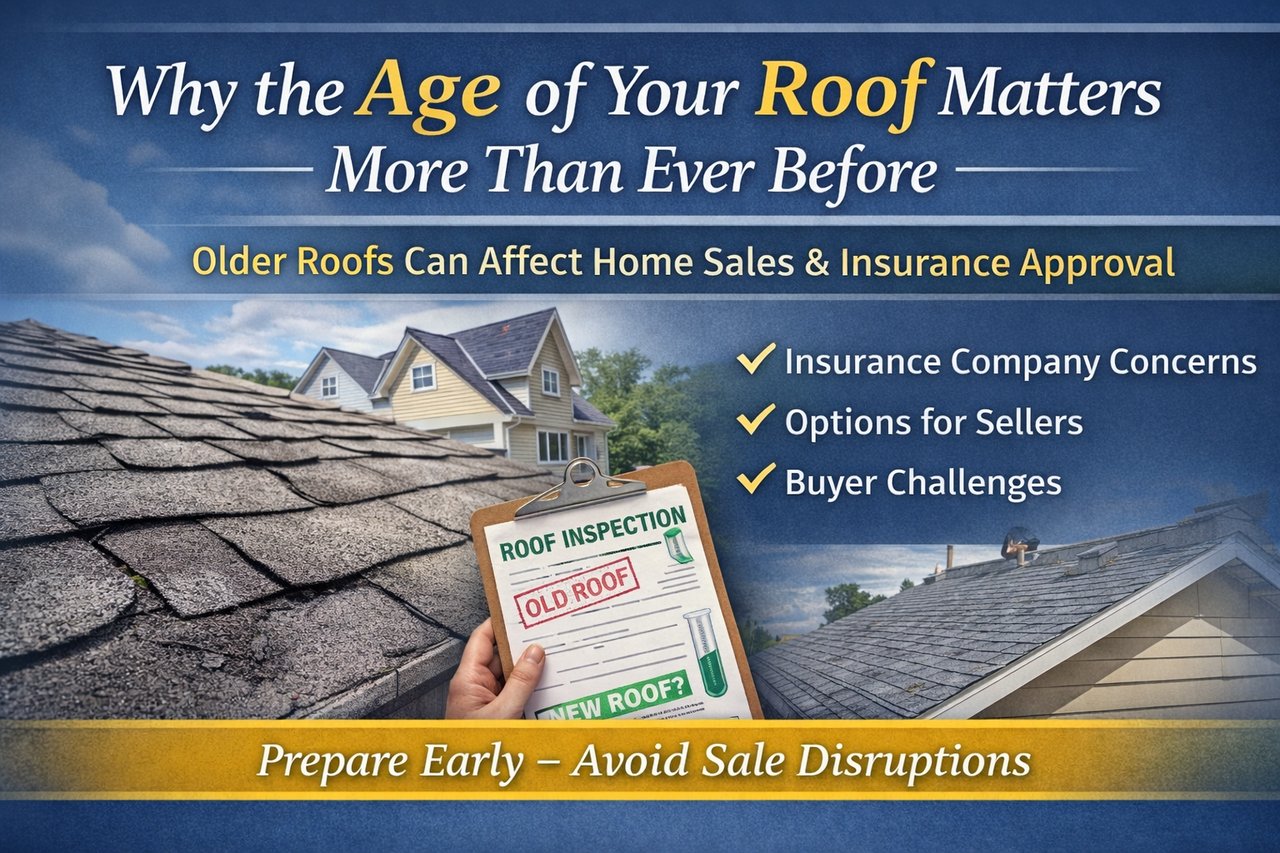
Today, the age and condition of your roof can directly impact whether a buyer can even obtain homeowners insurance — and that can affect whether your home sells smoothly at all.
Insurance Companies Are Being More Selective
In recent years, insurance companies have faced significant losses due to:
-
Severe storms
-
Increased weather-related claims
-
Rising material and labor costs
As a result, many insurers have tightened their underwriting standards.
They are now paying close attention to:
-
Roof age
-
Roof material
-
Visible wear and tear
-
Documentation of replacement
In some cases, insurance companies are refusing to insure homes with older roofs — even if they appear functional.
What’s Considered “Old”?
While standards vary by carrier, many insurers begin asking questions once a roof is:
-
15+ years old (for asphalt shingles)
-
Showing visible wear or curling
-
Missing shingles
-
Lacking documentation of replacement
Some companies may:
-
Require a roof certification
-
Exclude roof coverage
-
Increase premiums significantly
-
Decline coverage entirely
And if a buyer can’t get insurance, they can’t close on their loan.
Why This Matters for Sellers
If you’re preparing to sell your home in Pennsylvania, especially in Western Pennsylvania where we experience freeze-thaw cycles and seasonal storms, roof age should be part of your listing strategy.
Buyers today are:
-
More cautious
-
More budget-conscious
-
More dependent on insurance approval
An older roof can:
-
Slow down negotiations
-
Trigger insurance issues
-
Create appraisal concerns
-
Lead to last-minute contract stress
Planning ahead can prevent surprises.
Your Options as a Seller
If your roof is older, you generally have three strategic choices:
1. Replace the Roof Before Listing
This can:
-
Increase buyer confidence
-
Make your home easier to insure
-
Strengthen your negotiating position
-
Improve curb appeal
In some cases, a new roof can make your home more competitive in the market.
2. Offer a Credit to the Buyer
If replacement before listing isn’t ideal, you may:
-
Offer a credit at closing
-
Adjust pricing to reflect roof age
-
Allow the buyer to replace it after settlement
This approach gives buyers flexibility — but still addresses the concern.
3. Price Accordingly
If you choose not to replace the roof, your pricing should reflect:
-
Remaining roof life
-
Insurance limitations
-
Buyer perception
Ignoring the issue can result in price reductions later.
The Key Is Strategy — Not Panic
An older roof is not automatically a deal breaker.
But it is something that should be discussed before listing.
A proactive plan allows you to:
-
Avoid contract delays
-
Minimize renegotiation
-
Protect your bottom line
-
Maintain control of the timeline
Final Thoughts
In today’s market, the age of your roof matters more than it did even five years ago.
Insurance underwriting has changed. Buyers are more cautious. Lenders are more thorough.
If you’re thinking about selling in the next 6–12 months, understanding the condition and age of your roof early gives you options — and options create leverage.
Preparation isn’t just helpful. It’s powerful.